

As you we age, we suddenly find ourselves peeing when coughing or sneezing. Pelvic floor muscle training can help improve the stress incontinence symptoms.
Changes in lifestyle habits together with incorporating specific exercises for pelvic floor muscle training into our overall workout routine can help strengthen the pelvic floor and improve the stress incontinence symptoms. (for more information about the solutions for the most common menopause symptoms, click on this link)
What is the pelvic floor muscle and why it is important to be strong?
We can look at the pelvic floor muscle like the bottom of a water container that has multiple holes (in our case the urethra, vagina and anus).As the pressure rises (in our case sneezing, coughing, laughing, lifting weights) fluids can leak out of the holes (in our case urine and farts), but the tighter the bottom of the water container is, the harder it will be for the holes to open and the fluid to leak out of it.
What we are trying to accomplish with the workout it’s exactly this, tighten the bottom of the container (in our case the pelvic floor muscles).
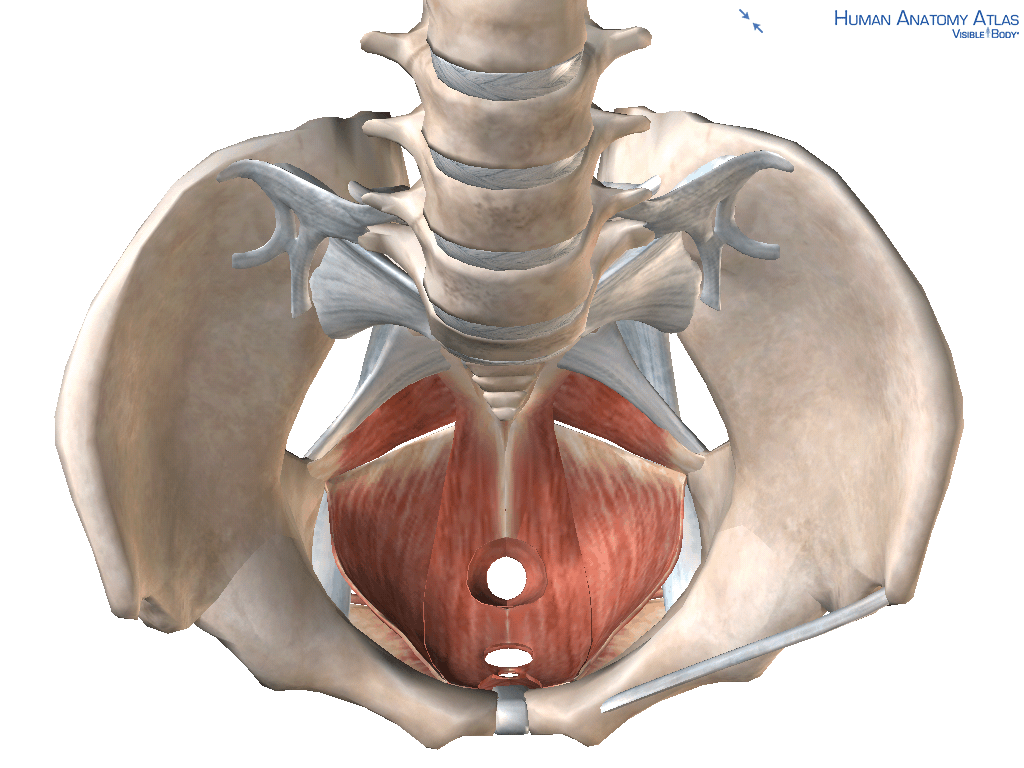
PELVIC FLOOR ANATOMY
Easy but effective workouts to strengthen your pelvic floor
All you will need is a mattress, weight plate disks varying from 2,5kg to 5 kg and a small pillow.
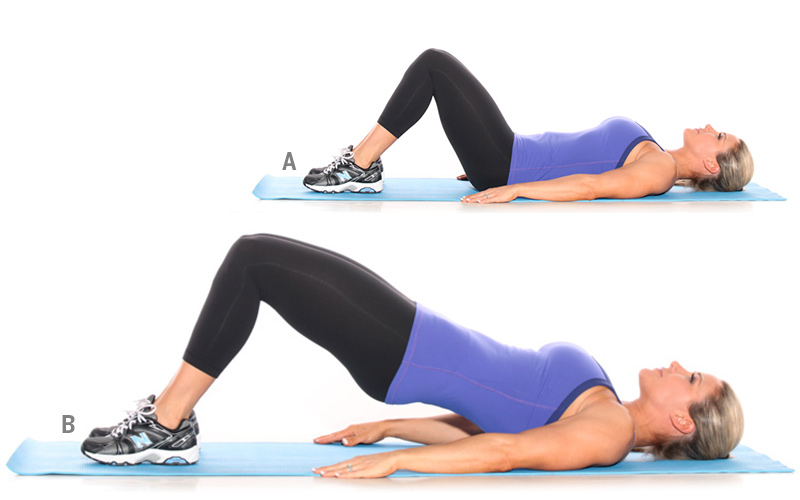
EXERCISE 1: THE BRIDGE
Lie on your back with your hands by your sides, knees bent, and feet flat on the floor.
- Raise your hips until your shoulders and knees are in a straight line. Squeeze the buttock. Squeeze your core at the same time, as if trying to pull your belly button back toward your spine.
- Hold this position for a count of one or two.
- Lower the hips to the floor slowly and with control to return to the starting position. To make it more effective, hold the weight disk on your pelvis. Start by doing 10 repetitions of this exercise.
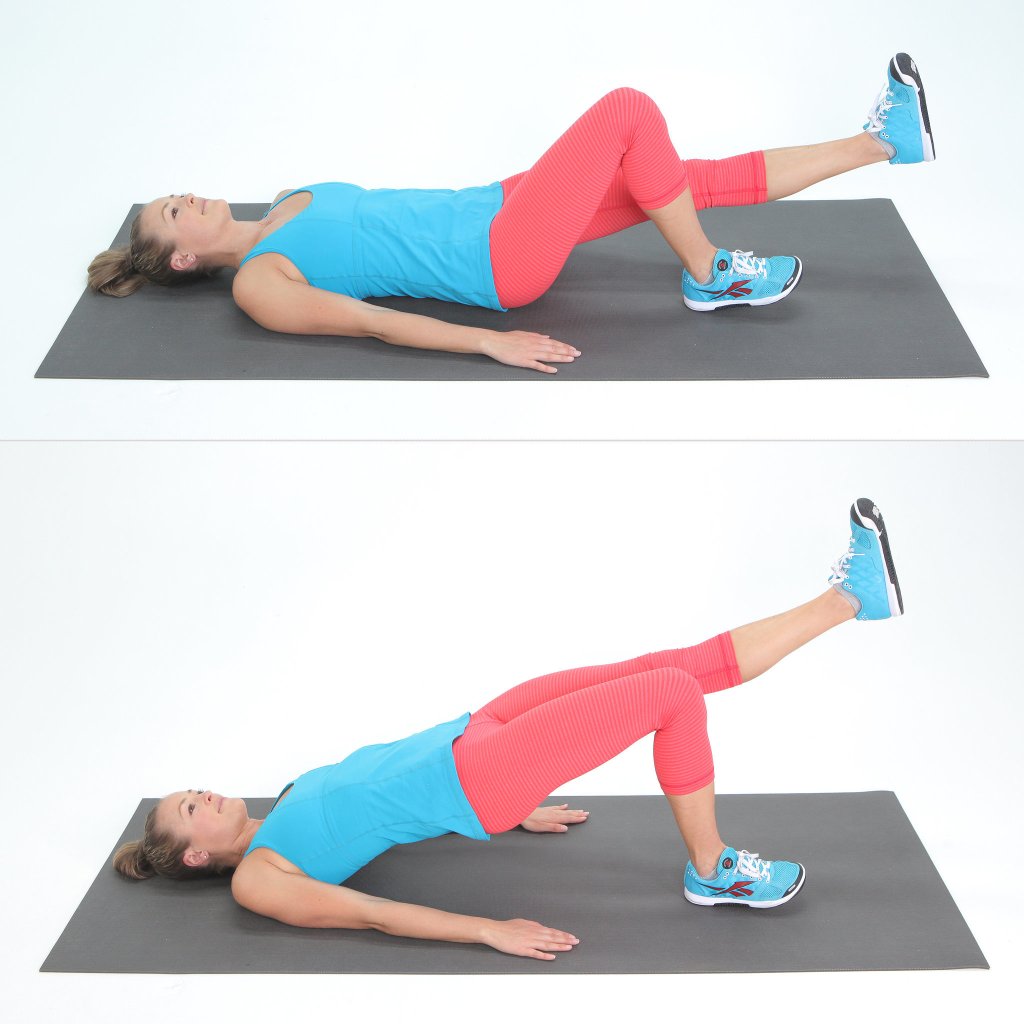
EXERCISE 2: SINGLE LEG BRIDGE
Lie on your back with your hands by your sides, knees bent, and feet flat on the floor. Lift one foot, extending the leg fully so it makes a 45 degrees angle to the floor. This is the starting position.
- Raise your hips until your shoulders and knees are in a straight line. Squeeze the buttock. Squeeze your core at the same time, as if trying to pull your belly button back toward your spine.
- Hold this position for a count of one or two.
- Lower the hips to the floor slowly and with control, keeping the leg extended, to return to the starting position. Repeat on the same leg for the desired number of reps.
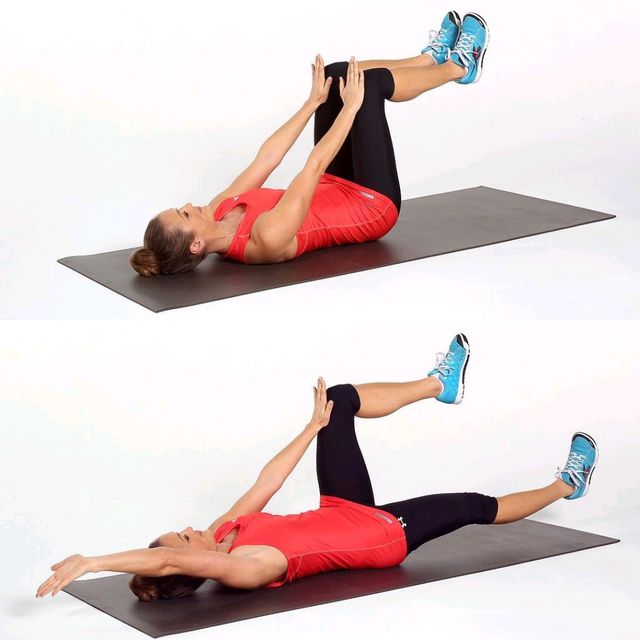
EXERCISE 3: THE DEAD BUG
Lie on your back with your hands by your sides, and feet flat on the floor.
- Bend your hips and knees 90-degrees, lifting your feet from the ground, so your knees are directly over your hips. This is the starting position.
- Engage your core, keep the contact between your lower back and the mat. Make sure the spine maintains this steady position throughout the exercise.
- Extend your right knee and hip, reaching your right heel toward the floor. Move slowly and steadily, don’t forget to maintain the steady position of the spine. Keep your feet in the air during the exercise, try not to touch the floor.
- Perform the same movements to the left leg. Alternate the legs. Imagine it’s like riding a bicycle with your feet in the air. Start by doing 10 repetitions for each side.
You can either do this exercise without engaging the hand, or you can alternate each movement with an opposite arm extension, like in the photo.
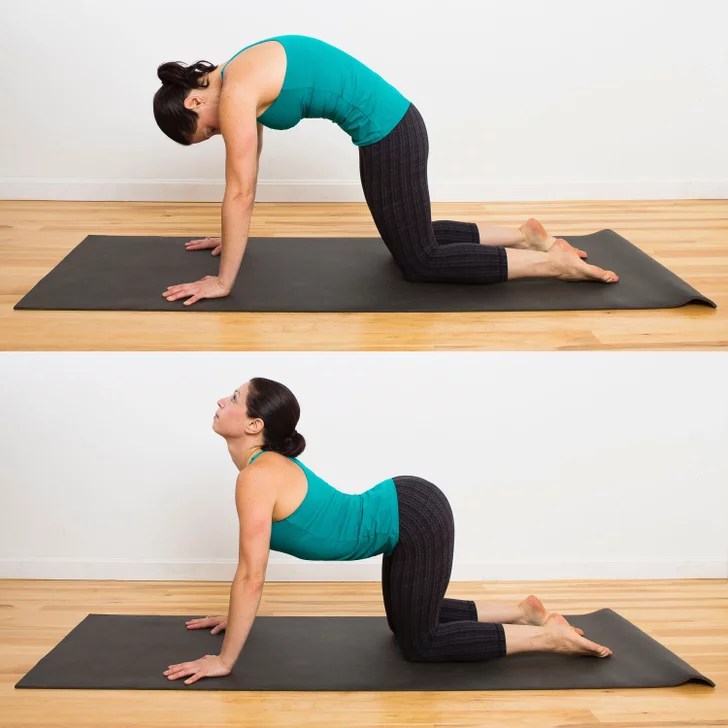
EXERCISE 4: THE CAT POSE
- Begin with knees and hands on the floor with fingers spread out. Your knees should align under your hips and your wrists under your shoulders.
- Tuck in your belly and feel your spine naturally round upward. This movement should be done while exhaling and engaging your core.
- Lower your head, and press with your fingertips to complete the flexion in your spine.
- As your back reaches peak roundness, hold this position for about 4-5 breaths.
- Lower your back, raise your head, and return to the starting position.
FOLLOW-UP
It is recommended to start these exercises gradually, increasing the number of repetitions and weights over time.
So,during WEEK 1 1-2 repetitions WEEK 2 2-3 repetitions WEEK 3 3-4 repetitions WEEK 4 4 repetitions or more
Do this workout at least 3-4 times a week, it takes only a few minutes, but you will see the benefits over time. Enjoy!


 Age in reverse
Leave a reply to Menopause-Why Do I Feel So Bad? Cancel reply